

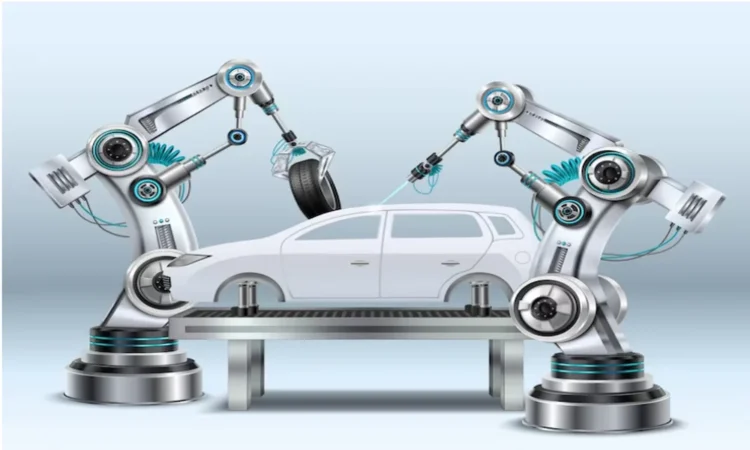

Enter a contemporary fabrication shop, and you might find something different from the stereotypical manufacturing image. Digital designs and automated equipment, precision cutting tools and machines that can perform the same task with remarkable consistency surround the workers, and they don’t need to rely solely on manual measurements and heavy machinery. New ideas and customer needs require manufacturers to respond quickly and advanced fabrication technology is affecting this.
The growing use of advanced fabrication technology is also helping manufacturers improve efficiency without sacrificing the quality of finished components. By combining digital design systems with precision machinery and automated processes, production teams can handle complex shapes, detailed specifications and repeat orders with greater consistency. This approach allows manufacturers to adapt more easily to changing project requirements while reducing avoidable errors and making better use of time and materials.
Precision Down To The Details
In manufacturing, there’s a lot of value in a small measurement. The part that’s slightly too big could be a problem, and a small error multiplied by hundreds of parts can add up to a costly issue. Manufacturers can rely on technologies like CNC machining, laser cutting, and automated welding to ensure precise measurements during production. The digital design can be stored in the equipment, and the machine will repeat the design over and over with the same results. This kind of control is particularly useful in industries that require very close tolerances between parts.
Transforming ideas into parts more quickly
When creating a new product, there was a lot of trial and error involved in the process. Now, digital fabrication tools are available to shorten that process. Engineers can develop a computer model, test the design, refine the design and instantly upload the new design to the production equipment. The digital file can sometimes be tweaked to create prototypes for different hole placements or slightly changed shapes without having to go through the whole process again. For manufacturers, it translates to less time from drawing board to finished part.
Materials should be used in a way that is better.
The cost of materials, such as metal, is high, and waste of materials can quickly add to the cost of production. Advanced cutting and fabrication systems enable businesses to use the raw materials in a more judicious way. Computer-controlled cutting can make very accurate cuts around a piece of metal, thus minimising waste. Additive manufacturing, such as 3D printing, works on the contrary, creating a 3D object layer by layer.
How people and machines interact in the workplace.
In-factory workflows are also getting an upgrade thanks to automation. Robots and automated systems can perform repetitive tasks like welding, cutting, drilling and moving materials. That doesn’t mean that skilled workers have lost their importance. Quite the opposite. When things go wrong there are still people required to program equipment, check parts, troubleshoot and make decisions. Automation just reduces some of the repetitive tasks from their plate.
More Room for Custom Work
Sometimes customers are not interested in products that are just taken from a regular template. They might require a part that is specific to a machine, building, or application. These more specialised and smaller orders are easier to deal with thanks to advanced fabrication. Since a digital design is not a hard copy, manufacturers can edit the design and make a new version without starting over from scratch.
It is a new kind of manufacturing.
Digital precision is coming to the factory floor with advanced fabrication. Better accuracy, less material waste, faster prototyping, and flexibility mean manufacturers can meet challenges that older production methods were unable to address.