

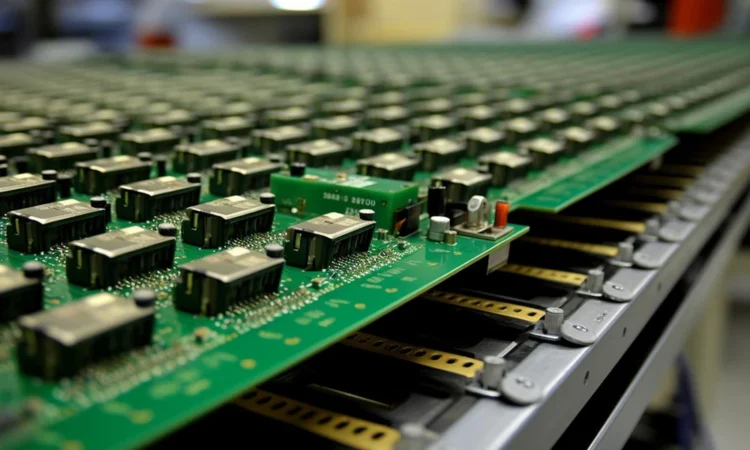

Bringing a circuit board to life involves two main stages: fabricating the bare board and assembling the components onto it. Some companies hand both stages to a single supplier, while others use one partner for fabrication and another for assembly. Each approach can work well for custom PCB assembly, but the right choice depends on the product, its volumes and how much the team wants to manage itself. Understanding where each model fits helps engineers and buyers avoid unnecessary delays and costs.
When a Single Supplier Makes More Sense
Keeping both stages under one roof reduces the number of handoffs in the process. A turnkey arrangement, where one supplier handles fabrication and assembly together, tends to suit projects with the following characteristics:
- Prototypes and new product introductions that go through frequent design revisions.
- Low to medium production volumes, where coordinating two vendors adds more effort than savings.
- Small engineering teams without dedicated purchasing or supply chain staff.
- Tight project timelines that leave little room for boards to travel between facilities.
- Designs with fine-pitch packages or rigid-flex boards, where fabrication and assembly decisions are closely linked.
When Separate Suppliers Make More Sense
Splitting the work between specialists can be the better route in other situations. Companies often choose separate suppliers when their needs look like these:
- Specialised fabrication, such as high-frequency materials, heavy copper or advanced HDI structures, that few assemblers produce in-house.
- Very high volumes, where negotiating each stage separately can reduce the unit cost.
- Long-standing relationships with a qualified fabricator that the company prefers to keep.
- A need for dual sourcing to protect production from disruption at a single site.
- Customer or industry requirements that specify approved vendors for particular stages.
Single Supplier vs Separate Suppliers at a Glance
A custom PCB builder offering both services and a pair of independent specialists differ in ways that go beyond capability. The comparison below covers some practical differences that are easy to overlook:
| Factor | Single Supplier | Separate Suppliers |
| Responsibility for defects | One party answers for both board and assembly issues | Fabricator and assembler may each point to the other |
| Handling between stages | Boards move internally with less risk of damage or moisture exposure | Boards are packed, shipped and stored between facilities |
| Cost visibility | Often quoted as one combined price | Each stage is priced separately, making comparison easier |
| Traceability records | Process data kept in one system | Records are split across two companies |
| Supplier management | One contract, one point of contact | Two sets of contracts, audits and communication |
| Engineering feedback | Fabrication and assembly input arrive together in one review | Each supplier reviews only its own stage, so issues spanning both may be missed |
Testing the Partnership Before Committing
Whichever model a company chooses, it helps to confirm that the supplier or suppliers can deliver what they promise. Before placing larger orders, teams often take steps such as these:
- Placing a small trial order to assess quality, packaging and communication.
- Requesting a design for manufacturability (DFM) review to see how thoroughly the supplier checks files.
- Checking relevant certifications and the assembly standard the supplier works to, such as IPC-A-610 class requirements.
- Asking how component sourcing, shortages and substitutions are handled.
- Visiting the facility or arranging a virtual audit where possible.
- Confirming typical lead times for both quick-turn and production orders.
Choosing the Model That Fits the Product
There is no single answer that suits every project. A single supplier often simplifies early development and smaller production runs, while separate specialists can offer advantages for complex boards or very high volumes. Matching the arrangement to the product’s stage, volume and technical demands helps companies balance cost, speed and control.
Get in touch with our engineers at MPN Tech to discuss fabrication and assembly for your next board under one roof.