

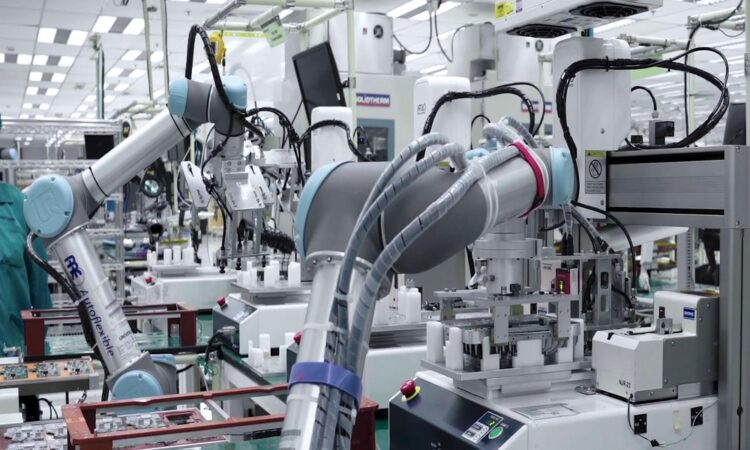

Industrial manufacturing relies heavily on consistency. For decades, the process of loading raw materials into processing machinery and removing finished parts has been a foundational, yet highly repetitive, task. This specific operation is known as machine tending. While it sounds straightforward, the execution of this process directly influences a facility’s overall throughput, scrap rates, and equipment utilization.
As manufacturing facilities face persistent labor shortages and shifting production demands, the reliance on manual intervention for these repetitive cycles introduces operational bottlenecks. Understanding the mechanisms of automated machine tending reveals how modern facilities maintain high efficiency while optimizing their existing workforce.
The Operational Mechanics of Machine Tending
At its core, machine tending involves the interaction between raw stock and a processing machine. This encompasses a wide range of industrial equipment, including CNC mills, lathes, injection molding machines, stamping presses, and brake presses. The cycle follows a strict sequence: opening the machine door, unloading the completed component, cleaning the workholding fixtures, loading a new piece of raw material, securing the fixtures, closing the door, and initiating the cycle.
Manual execution of this cycle introduces variable delays. A human operator may be managing multiple machines, leading to situations where an expensive CNC machine sits idle waiting to be unloaded. This idle period is known as “door-open time.” Minimizing this metric is a primary objective for process engineers looking to maximize capital equipment investment.
Why Automation Is Reshaping the Loading Process
Transitioning from manual operations to automated systems alters the economics of the factory floor. Robots do not experience fatigue, meaning the transition time between the end of a machining cycle and the start of the next remains constant across an entire shift. This predictability allows production managers to calculate exact output targets and optimize supply chains with high precision.
Safety remains a significant driver for this transition. Machine tending often requires operators to interact with heavy components, sharp metallic edges, and cutting fluids. Repetitive strain injuries and acute accidents are inherent risks in high-volume manual loading. Automating these steps removes human hands from hazardous zones, allowing operators to transition into higher-value roles such as quality control, programming, and process optimization.
The Technological Components of a Tending System
An automated machine tending setup requires several integrated components to function cohesively. The system is not merely an arm that moves back and forth; it is an interconnected ecosystem that communicates in real-time with the production machinery. Deploying a flexible machine tending robot allows small and medium-sized enterprises to adapt to high-mix, low-volume production schedules without needing dedicated, rigid automation cells for every single product line. Modern end-of-arm tools can be swapped quickly, enabling the same robotic arm to handle completely different geometries within the same afternoon.
Overcoming Implementation Challenges
Integrating automation into existing workflows requires careful planning. Legacy machinery may lack modern communication protocols, requiring retrofitting with pneumatic door openers and electronic relays to interface with the robotic controller.
Workholding is another critical consideration. Manual fixtures, like standard vices, often require conversion to pneumatic or hydraulic systems that the automated setup can activate via digital signals. Furthermore, part presentation must be standardized. If raw stock arrives in randomized bins, a vision system or structured tray array is necessary so the gripper can locate the material accurately.
Maintenance managers must also adjust their preventative maintenance schedules. While a robotic system reduces manual labor dependencies, it introduces new mechanical and electronic assets that require regular inspection. Ensuring that pneumatic lines are clear of moisture and that gripper pads are checked for wear prevents unexpected downtime.
The Future of the Automated Shop Floor
The trajectory of industrial manufacturing points toward deeper integration between hardware and software. Machine learning algorithms are beginning to play a role in how vision systems identify defects before a part is even loaded into a machine. Real-time data collection from the tending system can signal to upstream processes when tool wear inside a CNC mill is causing slight dimensional drifts, allowing for proactive adjustments.
As these systems become easier to program and deploy, the barrier to entry for smaller job shops continues to fall. The focus is shifting from whether a facility should automate its loading processes to how quickly a flexible system can be deployed to meet fluctuating market demands.